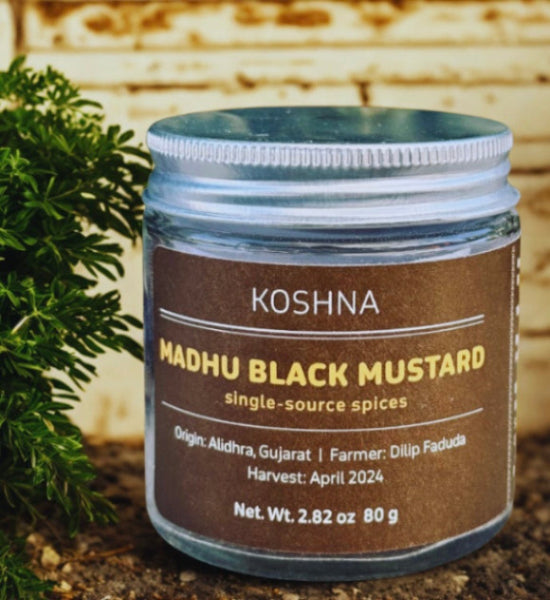
Single-Source
MADHU BLACK MUSTARD
MADHU BLACK MUSTARD
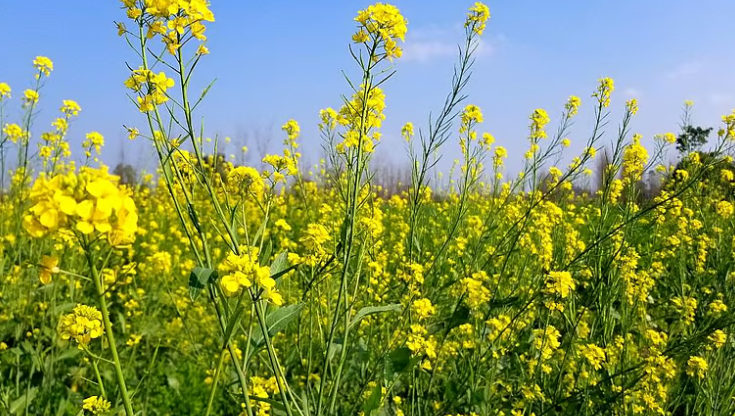
Grown sustainably in the foothills of Girnar Mountain, along the banks of the Madhuwanti River, this fiery and complex native mustard starts with a sharp, sinus-clearing heat of horseradish, beautifully balanced by earthy-sweet undertones of cabbage (ends) and the peppery bite of radishes. It enhances everything from stir-fries to stews, dressings to pickles.
Cultivated sustainably, it grows as part of a diversified farming system—intercropped alongside sesame seeds, wheat, sorghum, and pigeon pea.
When I met Dilip by chance, he shared that his 80-year-old mother, who’s always cleaned the mustard by hand, can no longer keep up. No machine or helper can clean it like she can, so he may no longer grow it. I took what he had, honored to bring this small-batch mustard to share with you.
ORIGIN: Alidhra, Gujarat
NAME: Madhu — named after the Madhuwanti River that flows through the region.
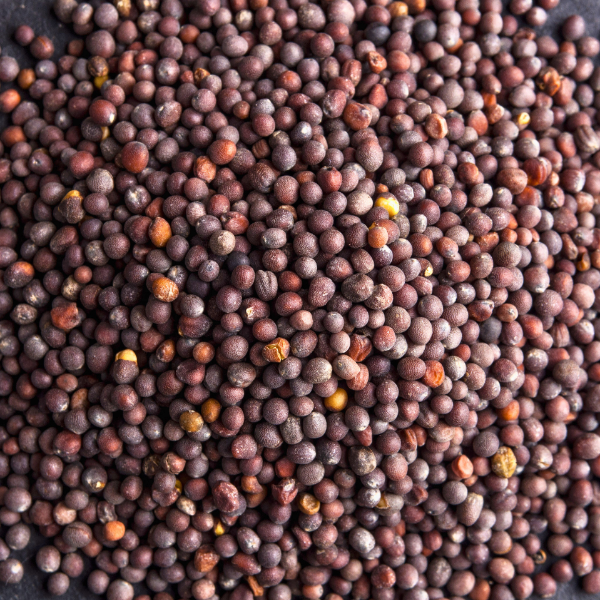


"The sharpness of this mustard is incomparable. It makes all other mustard taste dull " - Theresa
RECIPE INSPIRATION
-
We’d love to know how you use your spices! Follow and tag us on Instagram. @koshnaspices
OUR PARTNER FARMER, DILIP FADUDA FROM ALIDHRA, GUJARAT
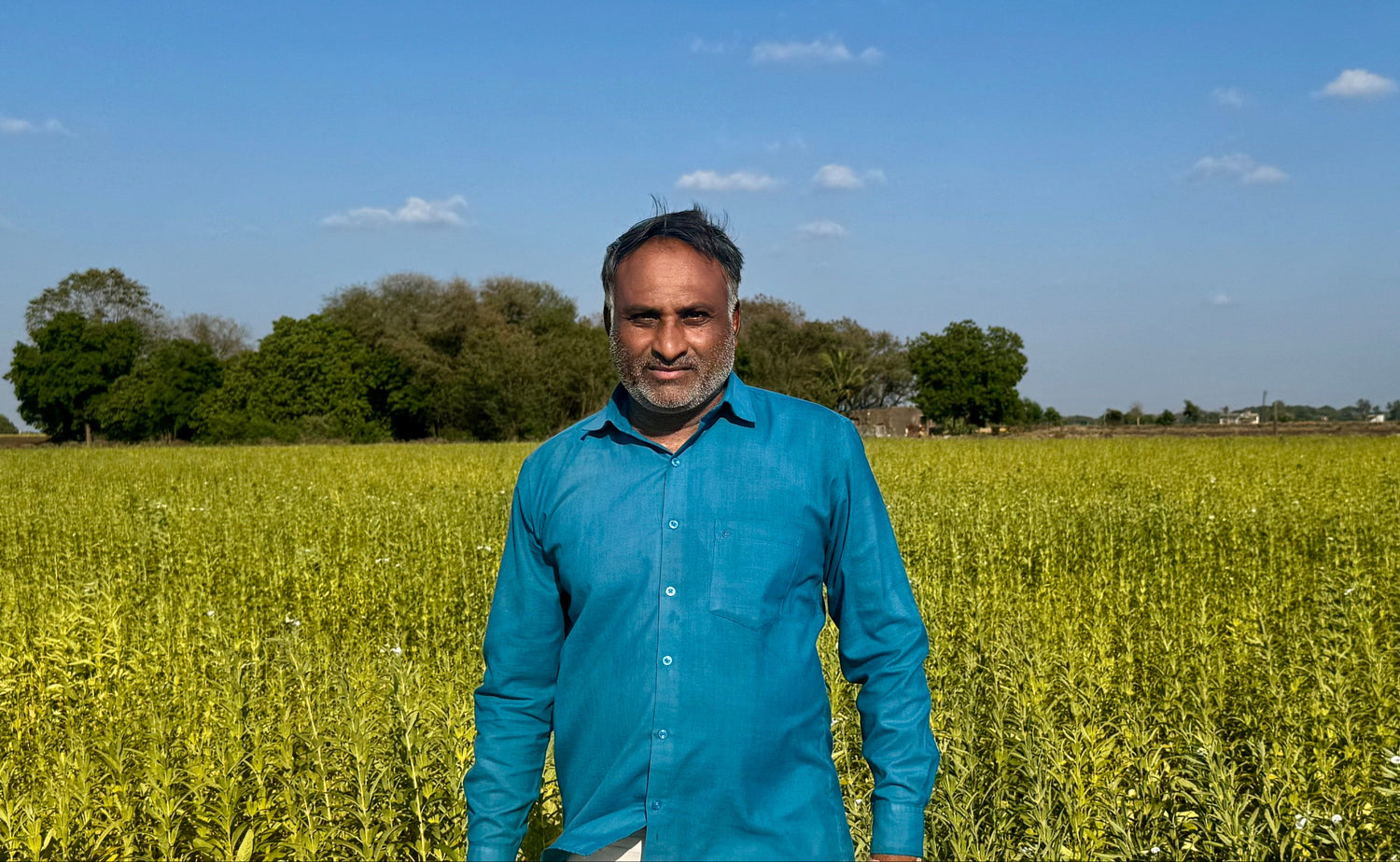
Fifteen years ago, Dilip inherited his father’s land and continued farming the way his father had, relying on conventional practices. But after two years of declining yields and mounting frustrations—despite the use of pesticides and fertilizers—he realized he had to make a choice: keep farming the same way and watch his land degrade, or try something entirely different.
On a leap of faith, Dilip chose the latter. He decided to abandon chemicals altogether, and instead, he focused on healing the soil and increasing biodiversity. After two years of experimentation and learning, the results started to speak for themselves. Now, over a decade later, Dilip's land is thriving with fertility, and he’s able to grow a diverse range of crops using regenerative, organic methods. Throughout the year, he rotates crops, growing everything from peanuts and potatoes to garbanzo beans, green gram, and papaya.
Dilip earns 5× the market rate through our direct-trade partnership.
- Market price: $0.75 | Koshna compensation: $3.26
- DHDebra H.Verified BuyerRated 5 out of 5 stars2 weeks agoUp your pickle game!
I added these mustard seed to my end of summer, New York style, Kirby, sour dill pickles along with Koshna's Chambal coriander, (along with the traditional grape leaves, other pickling spices and garlic), and two weeks later, after a wonderful fermentation in my crock, have the best pickles ever! Next, I'm going to try pickled mustard seeds!
- Choosing a selection results in a full page refresh.
- Opens in a new window.